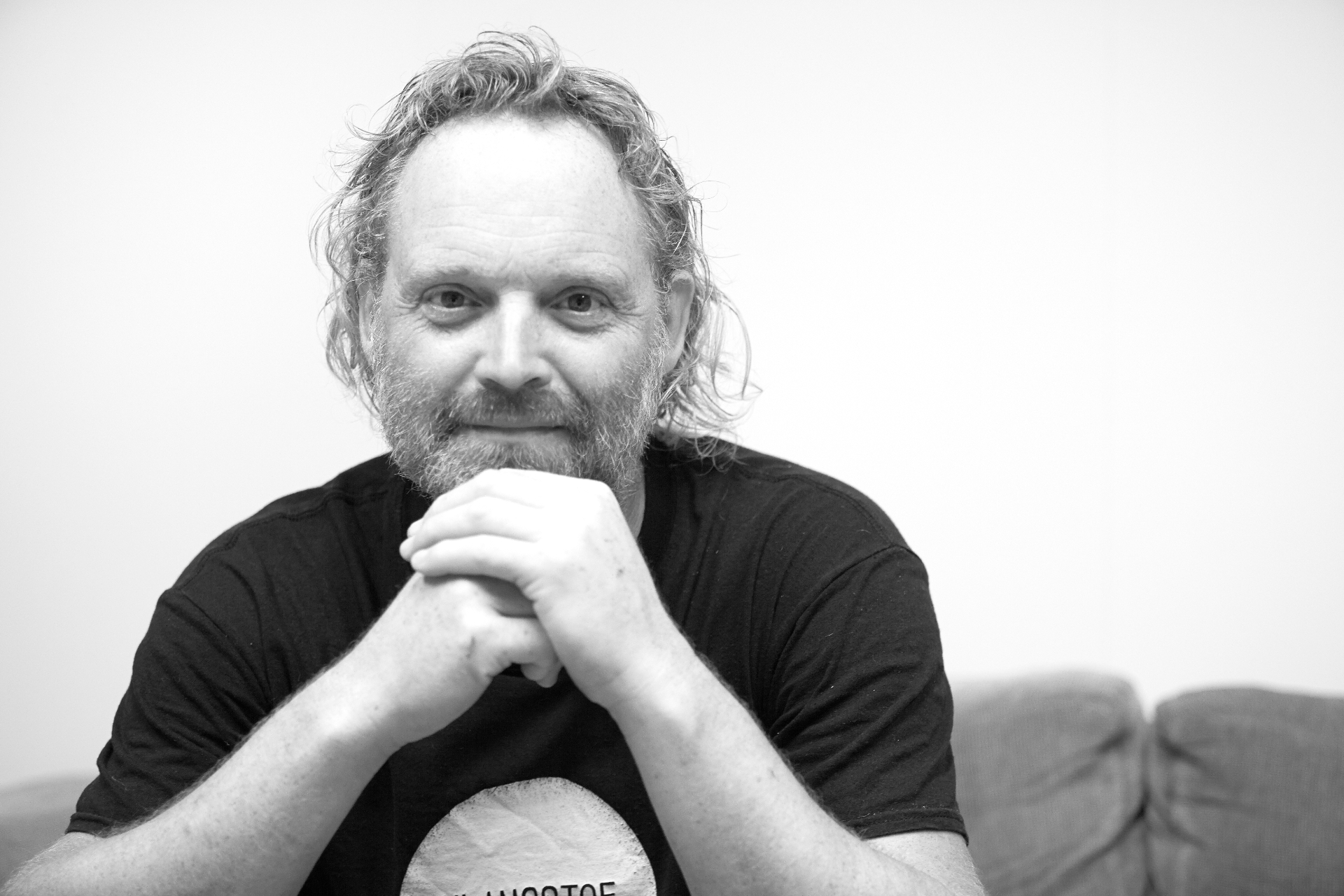
Taiko instructor
Erwin Oudshoorn
Teaching the craft. Practising it every day.
Whenever I thought I was starting to understand something, my teachers showed me yet other possibilities. Sometimes something I didn’t even know existed. How can you, as a student, know what you want to learn? You don’t know anything yet… That taught me to stay curious. Even after all these years.
A life with drums
Erwin Oudshoorn is a professionally trained musician and has been playing drums since his early youth. He learned the taiko craft from Japanese players of KODŌ, was artistic director of Circle Percussion for 25 years and has given percussion concerts all over the world with that group since 1993. In time his desire to pass on the taiko art grew. He does so as a player who keeps practising himself, and as a teacher who gladly shares what he has learned.
Taiko playing inspires me and after the many hundreds of concerts I feel an ever stronger drive to pass it on to anyone with the will to go for it. My vocational training as a musician and my broad background in music education certainly help with that.
The person behind the player
Erwin looks at what someone needs in order to move forward. He pays attention to how you move and how you sound, but also to how you learn, where you hold back and when you are ready for the next step. At the same time he keeps the whole in view. What does the group need in order to play better together?
I teach you to strike without ‘hitting’, and to move without locking yourself up. Taiko is about suppleness and efficiency. That ‘power’ we call ‘natural power’, and it grows out of a completely relaxed and free movement. We often practise that on taikos, sometimes precisely without them. Once your body understands what it does, you hear it back in your playing.
Method
In the Japanese arts the essence usually lies in simplicity. And that simplicity goes down infinitely deep. To keep it simple you have to study endlessly. You need the right mentality. It takes complete dedication, physically and mentally, to develop your technique and widen your insight. Your state of mind determines how you feel on the stage floor, how you move and how you act.
That is why Erwin likes to start — at every level — with simple material. For a beginner, an advanced player and a professional musician the same is true: the less attention the notes demand, the more room there is to feel how you move, how you strike and how the sound comes about. In that simplicity you can truly make the technique your own. From there every player continues at their own level, also inside far more complex material. The basis stays the same; what you can do with it keeps growing.
The natural way
From KODŌ member Ryutaro Kaneko, Erwin learned Yurumi-Daho — his way of playing along the natural path. Erwin sees this principle as the core of taiko playing: the essence, the starting point. In his trainings he also uses other means. A taiko workshop without drums is perhaps not what you would expect, but it brings clarity. You discover that playing taikos is not based on choreography, but rather on the physically natural way — like a bird flying or a fish swimming.
I like to use metaphors and the power of the laws of nature. With bamboo sticks, stones and ropes I can make taiko techniques visible and tangible. That gives insight and keeps the training down-to-earth.
Erwin works today from an intuitive ‘knowing’. With his energetic, relaxed playing and his apparently self-evident, loose way of passing things on, he is an inspirer par excellence. For his taiko trainings he developed a distinctive and highly effective method. He does not choose the easy path, not for himself and not for the group. Erwin gives his all, genuinely connects people and again and again finds the way that lifts you above yourself.
For anyone still doubting: “It will blow your mind!”
Enjoy what you are doing! Drop the idea of performance and have fun failing! So-called ‘mistakes’ are nothing more than perfect imperfections that give your creativity room.